The Cedar Creek waterfall is one of Cedarburg's most-photographed spots — though it helps to know what it actually is before you go: it's a historic mill-dam cascade, not a natural falls, where Cedar Creek drops over the dam beside the 1855 Cedarburg Mill in the heart of downtown. It's genuinely pretty, especially in spring when the water runs high, and it comes with 180 years of milling history. This guide covers where to find it, what it is, the best time to see it, and how to photograph it.
Where is the Cedar Creek waterfall?
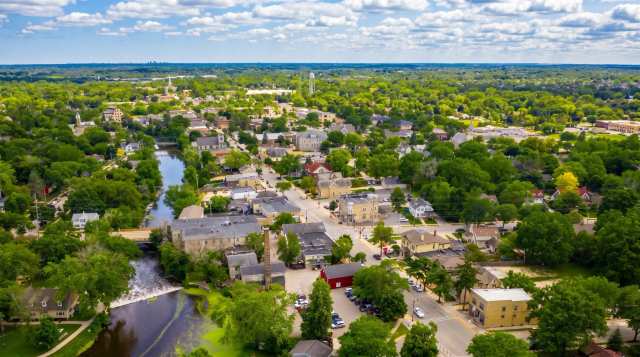
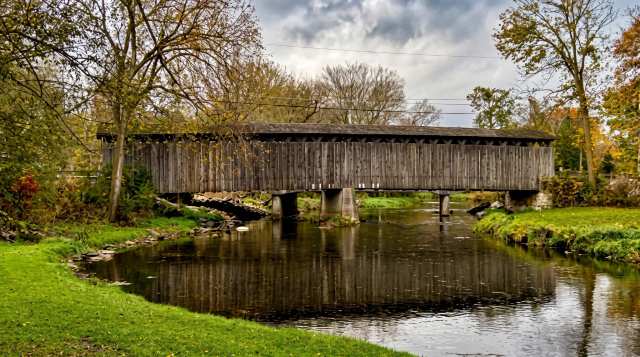
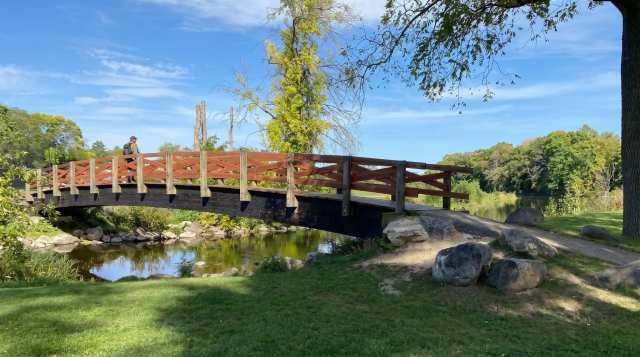
The main waterfall is right downtown, on Cedar Creek beside the Cedarburg Mill (the tall 1855 stone building on Bridge Road, now home to Landmark Feed and Rebellion Brewing). The dam here creates the cascade you'll see in most Cedarburg photos. It's a short walk from the Cedar Creek Settlement and the covered bridge, and you can view this Cedarburg waterfall from the bridge and the creekside near the mill — no hiking required. There's a second, smaller dam cascade upstream at Cedar Creek Park, which is the quieter, greener spot if you want the water without the downtown foot traffic. Between the two, the downtown mill dam is the more dramatic and the more historic.
Sponsored
What it actually is: the mill dams
Being straight about it: this isn't a natural waterfall. Cedar Creek drops about 80 feet over its run through Cedarburg, and the early German settlers harnessed that fall by building dams to power their mills. What you're looking at is water spilling over the Cedar Creek dam beside the mill — a mill-dam cascade. That's not a knock; the dam-and-mill combination is exactly what makes it photogenic, and it's a genuine piece of working history rather than a manufactured attraction. At its best, after spring snowmelt or a heavy rain, the water pours over the dam with real force. In a dry late summer, it can slow to a trickle, so timing matters (more on that below).
The history behind the falls
Cedarburg exists because of this waterpower. In 1844, town founders Frederick Hilgen and William Schroeder built a wooden gristmill on Cedar Creek; by 1855 they'd replaced it with the five-story stone Cedarburg Mill that still stands over the dam today, built by architect Burchard Weber in Greek Revival style at a cost of $22,000. They dammed the creek to drive the mill's water wheel, and the community grew up around it. Over the following decades, several dams and mills lined the creek — including the 1864 Hilgen and Wittenberg Woolen Mill (now the Cedar Creek Settlement) and the 1871 Excelsior Mill. In March 1881, heavy spring flooding washed out several of the creek's dams and bridges — a reminder of how much water this "gentle" creek can carry when it's running high. The Cedarburg Mill dam you photograph today is the direct descendant of that original 1840s waterpower.
The best time to see it
Water level makes or breaks the view. The Cedar Creek waterfall is at its most impressive in spring, when snowmelt and rain swell the creek and the dam runs full and loud — roughly March through May is the sweet spot. Heavy rain at any time of year will bring it up for a day or two afterward. By contrast, a dry stretch in July or August can leave the dam running thin. Winter has its own appeal, with ice formations along the dam edges, though footing near the water gets slick. If a dramatic waterfall in Cedarburg is what you're after, plan for spring or go a day or two after a good rain.
Photographing the waterfall
The classic shot pairs the water with the stone mill behind it — a frame you can only get here, and the reason this spot shows up on so many Cedarburg postcards. The pedestrian areas near the mill and the nearby bridge give you a clean angle on the dam with the historic building rising above it. Early morning gives soft light and the fewest people; overcast days actually work well for water photography, cutting the glare off the surface. If you want the silky long-exposure look, bring a tripod and a neutral-density filter and shoot at a slow shutter speed. And a practical note: this is a viewing and photography spot, not a swimming hole — wading in Cedar Creek within the city is not permitted, so enjoy it from the bank and the bridge.
Making a visit of it
The waterfall sits in the middle of everything worth seeing in Cedarburg, so it folds easily into a bigger day. The Cedar Creek Settlement — itself a restored 1864 woolen mill — is steps away, the historic covered bridge is a short drive north, and Rebellion Brewing sits right inside the old mill by the dam, so you can take in the falls and have a beer in the same building that the waterpower once ran. For the quieter version, head to Cedar Creek Park and its upstream dam. Our outdoor things to do in Cedarburg guide maps out the rest, and the things to do in Cedarburg hub covers a full day in town.
Frequently asked questions
Published August 25, 2026