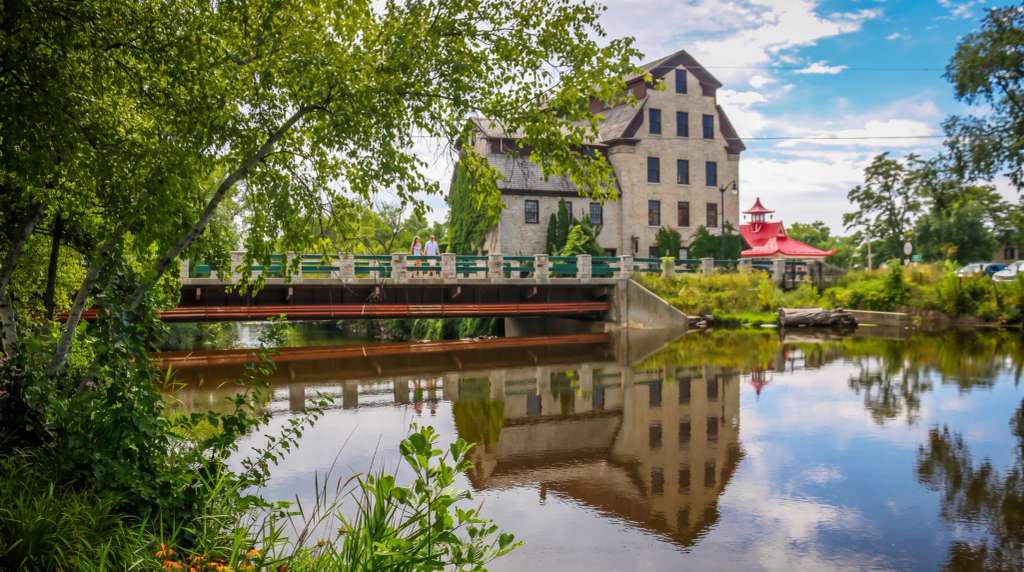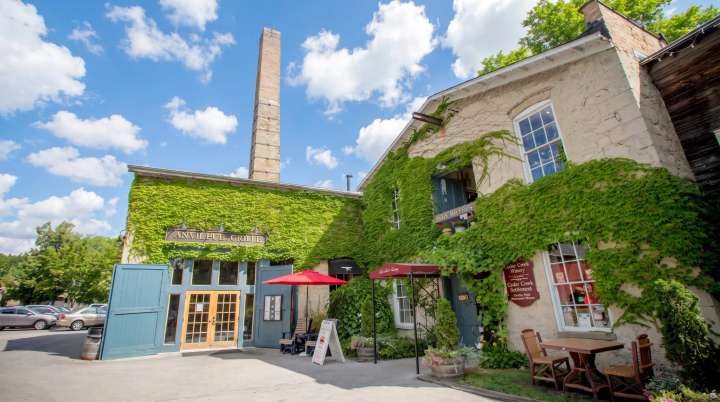
Cedar Creek Settlement is a restored 1864 woolen mill in downtown Cedarburg, Wisconsin. What started as the Hilgen and Wittenberg Woolen Mill operated as a working mill for over a century, sat vacant for three years after closing in 1969, and was reopened in 1972 as a multi-tenant retail and dining complex. Today the Settlement houses more than twenty independent shops, three restaurants, and Cedar Creek Winery. The limestone buildings sit along the north bank of Cedar Creek at the northeast edge of the historic downtown, and the site is listed on the National Register of Historic Places.
This guide covers what you'll actually find at Cedar Creek Settlement in 2026: the anchor tenants worth planning around, the shops that reward browsing versus the ones that draw destination visitors, how the winery operates, where to eat on-site, and how to combine a Settlement visit with the rest of downtown Cedarburg. Parking, accessibility, and festival-weekend considerations close the guide.
Sponsored
Twenty-plus independent tenants inside an 1864 mill, all under one roof, all walkable in an hour.
What is Cedar Creek Settlement?
Cedar Creek Settlement is a mixed-use historic site: retail, dining, and a winery inside the original 1864 mill complex. The main mill building has three floors and houses the majority of the tenants; the adjacent buildings from the original woolen operation add a few more. The site sits directly on Cedar Creek, and the exterior grounds include walking paths, footbridges, and the adjacent Cedar Creek Park.
The Settlement is not a shopping mall. It is not a re-created historic village. It is a working commercial complex inside authentically preserved 19th-century industrial buildings. The tenants are independent operators who lease space from the Settlement's ownership. Some have been there for decades; others rotate every few years. The mix is what makes the site work: a serious winery, a longstanding French-inspired cafe, artisan chocolatiers and jewelers alongside seasonal Christmas and ornament specialty shops.
History: from woolen mill to Cedar Creek Settlement
The mill was built in 1864 by Diedrich Wittenberg and Frederick Hilgen, two German immigrants who had already built the neighbouring Hilgen and Wittenberg Woolen Mill Complex. The 1864 building is the surviving core. The mill operated as the Hilgen and Wittenberg Woolen Mill for over a century, spinning wool for blankets, uniforms, and clothing that shipped throughout the Midwest and beyond. It was one of Cedarburg's largest employers through the late 1800s and early 1900s.
The mill closed in 1969 and sat vacant for three years. In 1972, Jim Pape and Bill Welty purchased the property and began the restoration that produced Cedar Creek Settlement. Pape and Welty preserved the exterior limestone construction and interior heavy-timber framing, added mechanical systems and modern retail infrastructure, and leased the resulting spaces to independent tenants. Cedar Creek Winery opened in the lower level in 1972 with the first commercial retail, and the same year Pape launched Cream and Crepe Cafe on the third floor. The cafe still operates there today.
The Settlement was listed on the National Register of Historic Places in 1974, two years after restoration began. The listing covers the mill complex and the surrounding buildings from the original woolen operation. The historic designation constrains what can be changed on the exterior but allows the interior tenant mix to evolve with the market.
The shops at Cedar Creek Settlement
More than twenty independent shops operate inside Cedar Creek Settlement. The tenant roster shifts as businesses come and go, but the anchor categories have been stable for years: artisan crafts, jewelry, pottery, and home decor; specialty food and confectionery; Christmas and ornament specialty shops that draw destination visitors throughout the fourth quarter; boutique clothing and accessories.
Amy's Candy Kitchen and Ice Cream Parlor is the confectionery draw. Delicious handcrafted candies and creamy fudge, extensive selection of gourmet caramel apples, chocolates, and other sweets, paired with a variety of premium ice cream flavours in a warm setting. The shop is a Settlement institution and one of the tenants that has expanded beyond the site itself (there's a downtown Washington Avenue location too, and both operate independently within the Amy's brand).
Alpine Gift Haus is the year-round Christmas shop. An extensive selection of Christmas and holiday-themed gifts, ornaments, decorations, and home decor across all four seasons. The shop draws destination visitors particularly through the September-through-December window, though the year-round hours mean summer visitors also stop in.
Itty Bitty Piggies is the more unusual boutique inside the Settlement. A charming, unique, curated experience with hand-selected items across specialty gifts, home goods, and personal accessories. Strong customer service and merchandise that rewards browsing rather than a quick pop-in.
The Olive Sprig is the specialty food shop. Fresh Mediterranean-inspired ingredients including a wide selection of premium olive oils and vinegars, gourmet food items, tastings on request. The shop overlaps with the winery tasting-room experience for visitors interested in a full food-and-drink tour of the Settlement.
Additional tenants rotate over time. The Settlement's official site maintains the current roster. Expect to find pottery and ceramics studios, jewelry boutiques, women's clothing shops, home decor and gift shops, and a handful of specialty seasonal shops that appear during the holiday windows.
Cedar Creek Winery
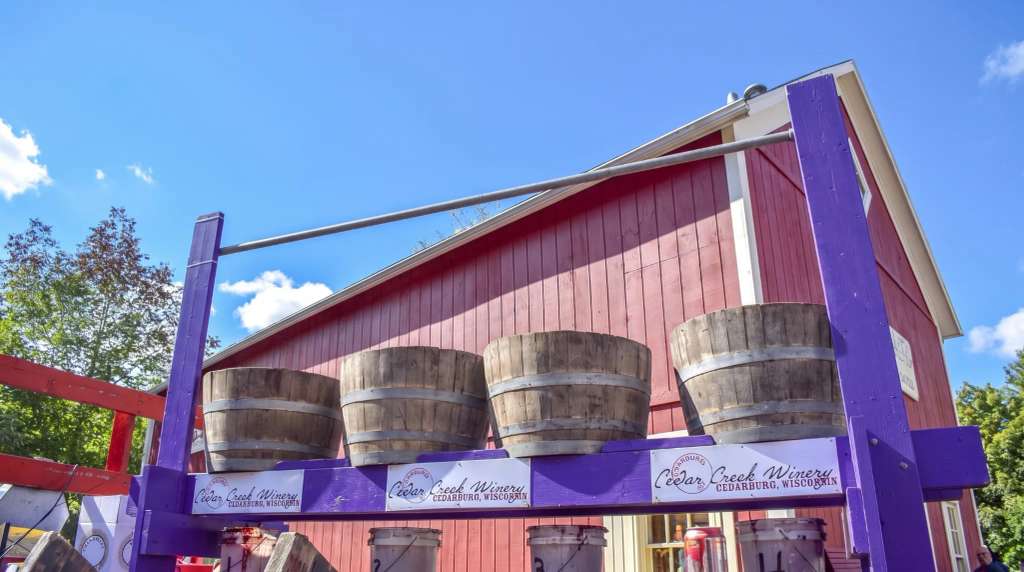
Cedar Creek Winery occupies the lower level of the main mill and has been in continuous operation since 1972, acquired by the Wollersheim family in 1990. The seven-day tasting room walks visitors through dry reds, off-dry whites, and sweet fruit wines, with cheese and charcuterie boards and the signature pinot grigio Swiss cheese spread that turns up on menus around town (Hefner's Cedar-Burger is the best-known example). It's the Settlement's anchor tenant and one of the main reasons visitors come.
For the full story — tasting flights and prices, the cellar tour, the wines to try, and the winery's history in the 1864 mill — see our complete Cedar Creek Winery guide.
Restaurants at Cedar Creek Settlement
Three restaurants operate at or immediately adjacent to the Settlement, each covering a different meal and mood.
Cream and Crepe Cafe operates on the third floor of the main mill and has been in continuous operation since 1978. French-inspired crepes ranging from hearty savoury options (ham and Swiss, spinach and mushroom, chicken variations) to indulgent sweet versions (fruit, Nutella, dessert-style), plus classic American sandwiches and a rotating soup selection. The cafe's third-floor setting inside the 1864 mill is what most visitors remember; the atmosphere is a genuine draw beyond the food itself. Lunch and light-brunch service; the cafe does not offer dinner.
The Hamilton at Cedar Creek is the corner-bar option next door to the Settlement. Farm-antique decor, a heated outdoor patio, bar snacks served alongside savoury cocktails and traditional beer chasers, bowls of warm cashews on the counter. Sunday mornings draw a lively crowd; weekday evenings are quieter and feel more local.
Anvil Pub & Grille operates from a restored 19th-century blacksmith shop across the creek from the Settlement, about a two-minute walk. Rustic character intact: loft dining, stone hearth oven that bakes bread daily, signature sandwiches on that fresh bread. American classics menu with hearty soups and shepherd's pie. The elevated outdoor patio sits directly alongside Cedar Creek and offers some of the most pleasant evening dining views in the downtown district.
For visitors wanting to extend the Settlement into a full Cedarburg evening, where to eat in Cedarburg covers the broader downtown restaurant scene, most of which is within a five-block walk of the Settlement.
Parking, accessibility, and getting there
Cedar Creek Settlement sits at N70 W6340 Bridge Road, on the north edge of downtown Cedarburg. From the main downtown drag on Washington Avenue, the Settlement is roughly a two-minute walk north along Bridge Road. From the interstate, the Settlement is a five-minute drive from the I-43 Cedarburg exit.
Free parking is available on-site in the lot immediately adjacent to the mill, and additional free parking is available in the small public lots along Bridge Road and the adjacent side streets. On weekends the on-site lot fills first; the small public lots one block over almost always have spaces. The lots fill quickly during the Strawberry Festival weekend in June, Wine and Harvest Festival in September, and the holiday shopping windows in November and December.
Accessibility inside the mill is partial. The main floor and lower level (where the winery tasting room sits) are accessible via ramp entrances. The upper floors, including Cream and Crepe Cafe on the third floor, are accessed by stairs. The mill's original construction did not accommodate elevator infrastructure without significant modification, and the historic listing constrains what can be added. Visitors who cannot manage stairs should plan around the main-floor tenants and the winery, both of which offer a substantial experience without needing to visit the upper floors.
The exterior grounds, footbridges, and adjacent Cedar Creek Park are accessible for most mobility levels. The paths along Cedar Creek are paved or well-graded gravel and can be navigated by wheelchair or stroller in dry conditions.
Cedar Creek Park
Cedar Creek Park sits immediately adjacent to the Settlement along the creek — grassy areas, paved paths, and mill views, good for a 20-to-30-minute break between shopping and the winery. Leashed dogs are welcome, and the park hosts events during festival weekends.
For the waterfall, the playground, the full walk, and the Summer Sounds concert series, see our Cedar Creek Park guide.
Combining Cedar Creek Settlement with downtown Cedarburg
Cedar Creek Settlement makes sense as either a full afternoon on its own or as one anchor of a broader downtown Cedarburg day. For a Settlement-only visit, budget 2 to 4 hours: an hour browsing the shops across three floors, an hour in the tasting room with a cheese board, a meal at Cream and Crepe, and a walk through the park.
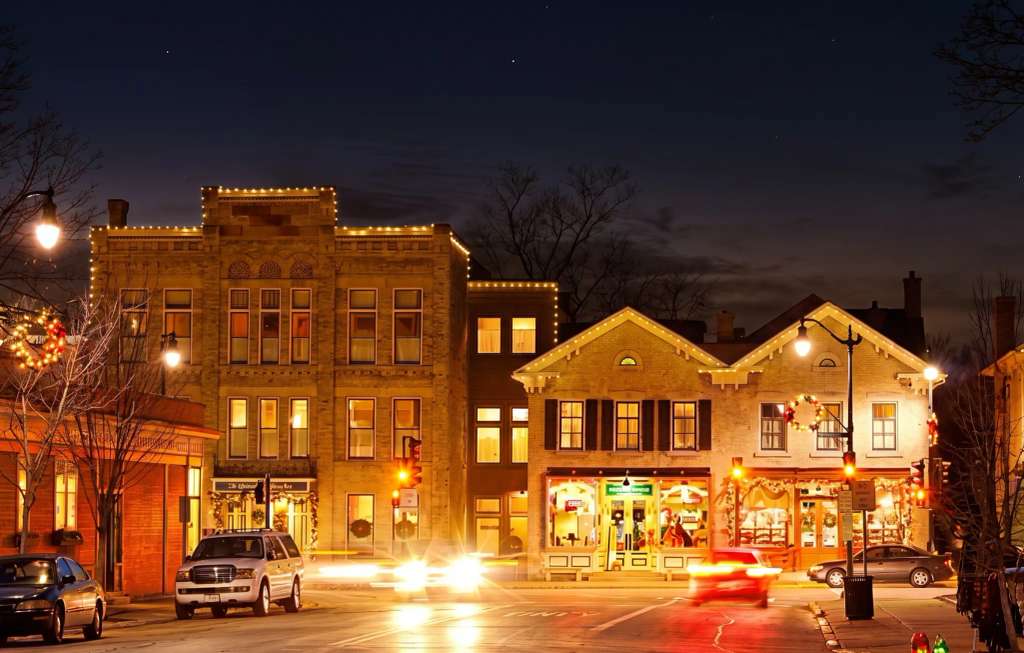
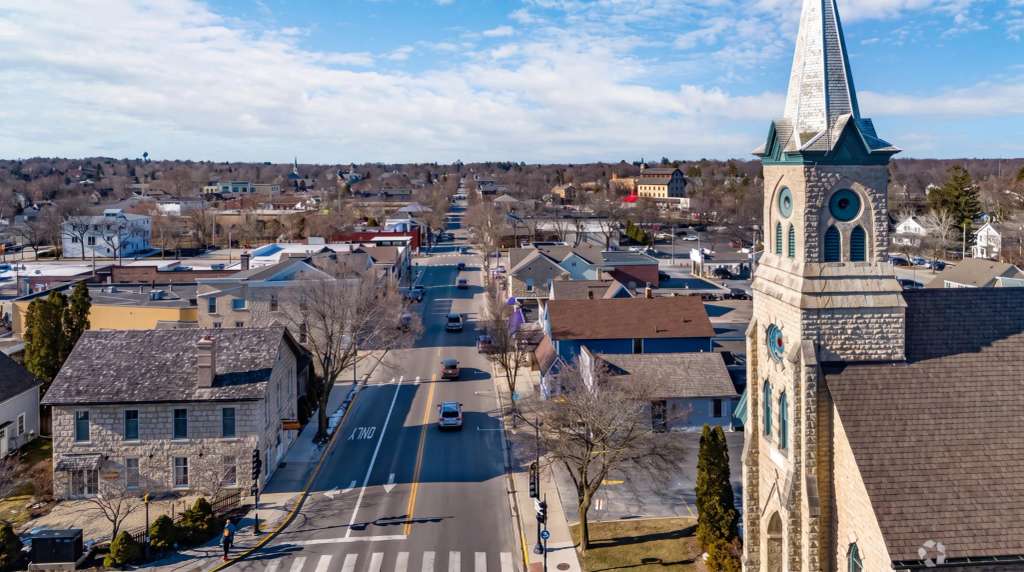
For a broader Cedarburg day, combine the Settlement with downtown Washington Avenue. The Washington Avenue historic district runs south from the Settlement for roughly five blocks and includes additional shops, restaurants, breweries, and the historic Washington House Inn. The broader downtown cedarburg shopping and dining is walkable from the Settlement in under 10 minutes. A typical full day: morning coffee at Cedarburg Coffee Roastery on Washington Avenue, lunch at Cream and Crepe inside the Settlement, wine tasting at Cedar Creek Winery, browsing the Settlement shops, and dinner at one of the sit-down restaurants downtown.
The Cedarburg Covered Bridge sits about a five-minute drive north of the Settlement and is worth adding to any first-time Cedarburg visit. It's the last remaining historic covered bridge in Wisconsin still standing in its original location.
When to visit Cedar Creek Settlement
The Settlement is open year-round with individual tenant hours. The core operating hours are approximately 10 AM to 5 PM daily, with the winery tasting room and some shops running longer hours on Friday and Saturday. Check individual tenant hours before planning around specific shops; smaller tenants sometimes close on Sundays or Mondays.
Seasonally, the Settlement operates on three cadences. The regular season (roughly May through August) has steady weekday and weekend traffic, easy parking, and comfortable walking weather. The peak season (September through December) is the busiest: Wine and Harvest Festival draws crowds in mid-September, the holiday shopping season builds through October and November, and the Christmas-themed tenants like Alpine Gift Haus reach their busiest windows in November and December. The quieter season (January through April) has the lightest traffic; parking is trivial and the winery tasting room is at its most relaxed pace.
Weather matters more than most visitors expect. The mill's stone construction stays cool in summer and cold in winter; the winery's lower level in particular is noticeably chilly in January and February. Bring a light layer year-round. The outdoor spaces (park, footbridges, patio) are pleasant from May through September and less usable through the colder months, though a walking visit to the exterior grounds still works with appropriate clothing.
Frequently asked questions
Published April 7, 2026