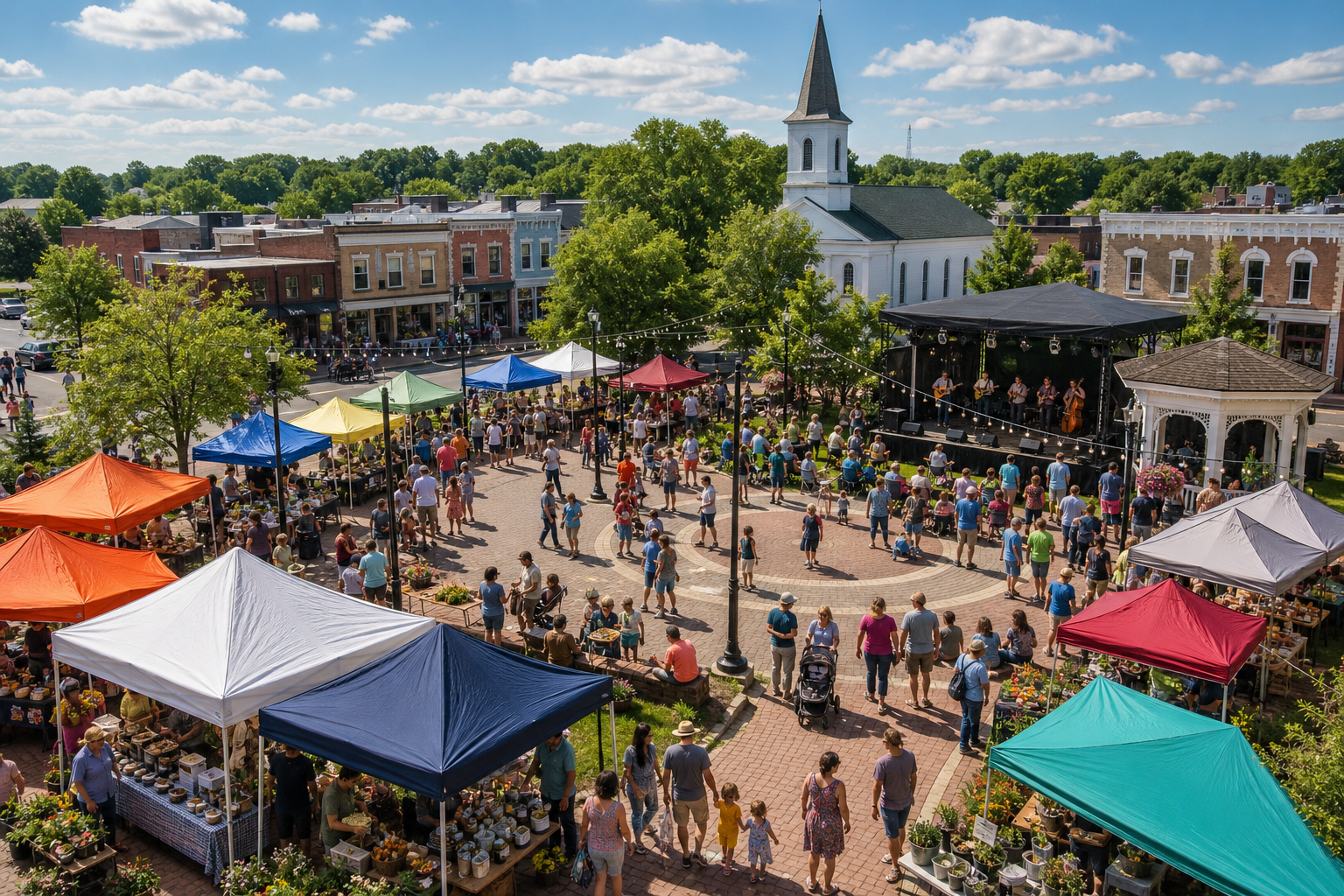
A full town square does not happen by accident; it happens because someone made sure the right families knew where to be.
Get your town square event in front of local families
List your community event on Local Eyes and put it in front of the families in your town who are already looking for something to do.
Families search before they show up
Word of mouth still works, but it no longer works alone. Before a family commits a Saturday afternoon to a community event, someone in that household searches online: "things to do this weekend," "events near me," or the name of your town plus "festival." If your event does not appear in those results, it does not exist for that family. Foot traffic alone is not a reliable audience-building strategy for town square events, because the people most likely to attend are actively looking for plans and making decisions days in advance. Smaller neighborhood gatherings and pop-up activities rarely reach mainstream media, which means they depend almost entirely on community platforms and local calendars to be discovered. Getting listed is not a bonus step; it is the first step.
The platforms that actually reach local audiences
Several platforms are built specifically for local event discovery, and each reaches a slightly different slice of your community. Google Business Profile lets you create events that surface directly in local search results, which is where most discovery begins. Eventbrite is widely browsed by people looking for local things to do, and even listing a non-ticketed event there gives it a searchable presence. Nextdoor Events reaches a neighborhood-based audience by design, making it well suited for hyper-local gatherings. Meetup works for community groups organized around a shared interest or cause. Yelp's community events section and local subreddits round out the digital landscape, though subreddit submissions should follow each community's promotion guidelines. City government websites, local business associations, and tourism boards also maintain calendars that feature dates, locations, and schedules, and submitting to community calendars puts your event in front of residents who check those sources regularly.
How centralized calendars reduce the submission burden
One of the most practical shifts in community event promotion is the move toward centralized publishing. Modern event calendar platforms let organizers publish once and distribute to multiple channels: a website listing, a Google Business Profile update, a Facebook post, a newsletter entry, and participating community calendars can all be fed from a single submission. This matters because the alternative, submitting separately to every platform, is time-consuming enough that many organizers skip channels and lose reach. Community calendar networks allow businesses and organizations to contribute events once and distribute through local networks, reducing that duplicate submission burden. For recurring events like weekly farmers markets or monthly outdoor concerts, a centralized approach is especially valuable because updates and changes only need to be made in one place.
Social media and offline channels still close the loop
Digital listings get your event indexed and discoverable, but social media is where anticipation builds. Sharing vendor lists, entertainment schedules, special activities, and logistical details on Facebook and Instagram gives followers enough information to plan a visit before the day arrives. Parents specifically value practical details: parking availability, restroom access, and food options are the kinds of specifics that convert interest into attendance. Offline channels remain relevant too. Libraries, community centers, and places of worship maintain their own event calendars, post flyers, and announce upcoming events to their congregations and members. A printed flyer in the right community space still reaches people who are not active on social media. The strongest promotion plans treat digital and physical channels as complementary, not competing.
How to promote your town square event step by step
- 1
Define the event details and audience
Before writing a single listing, nail down the specifics: date, time, location, what is happening, who it is for, and what families need to know to attend comfortably. Clarity on your audience shapes every other decision, from which platforms to prioritize to what copy to write. A family-friendly outdoor concert series needs different messaging than a faith community's holiday fair, even if both happen in the same town square. Knowing your audience also helps you choose the right photos and set realistic attendance expectations.
- 2
Choose the right platforms for your event type
Not every platform suits every event. Google Business Profile is essential for any event tied to a physical location because it surfaces in local search. Nextdoor Events works best for neighborhood-scale gatherings where the audience is literally nearby. Eventbrite adds discoverability for people actively browsing for things to do, and even non-ticketed events benefit from a listing there because attendance estimates help with logistics like seating and volunteer coordination. For interest-specific events, Meetup reaches communities organized around shared causes. List your event on Local Eyes to reach residents and visitors already browsing your town's guide.
- 3
Write a listing with strong copy and photos
A listing without a photo is easy to scroll past. Use a clear, well-lit image that represents the event accurately, whether that is a previous year's crowd, the venue, or the featured activity. In the copy, lead with what makes the event worth attending: the entertainment, the vendors, the activities for kids, the atmosphere. Practical details belong in every listing: address, parking notes, whether food is available, and any accessibility information. Write for the parent who is deciding between your event and staying home; give them enough to say yes.
- 4
Share across channels well before the date
For community-scale events, six to eight weeks is typically adequate lead time for proper promotion. Post to social media early and update regularly as the date approaches, sharing new details like confirmed vendors, performers, or activities. Submit to city government calendars, local business association newsletters, and tourism board listings. Libraries, community centers, and places of worship are worth contacting directly. Multi-channel promotion compounds: each additional place your event appears increases the chance a family encounters it through their own discovery habits.
- 5
Follow up and build toward the next event
After the event, post photos and a brief recap on social media. Tag vendors, performers, and partners so the content reaches their audiences too. Encourage attendees to leave a review or share their experience, since community feedback builds credibility for future editions of the same event. If the event recurs, keep the listing active and updated rather than creating a new one each time. A well-maintained listing with a history of past events signals to new visitors that this is an established, reliable part of the community calendar.
Benefits
Town-level visibility for your event
Local Eyes organizes content by location, so your event appears within the guide for your specific town. Residents and visitors browsing that town's page encounter your event in context, alongside restaurants, venues, and local recommendations they are already exploring.
Connection to interest-based guides
Events listed on Local Eyes can connect to interest-specific guides covering live music, farmers markets, private event spaces, and more. A family-friendly outdoor concert reaches music fans; a market event reaches food and wine enthusiasts already using those guides.
Reach into neighboring towns
Local Eyes links neighboring towns through shared businesses, events, and guides. An event in one town square can be discovered by residents of nearby communities who regularly cross town lines for things to do. Neighboring-town reach expands your potential audience without requiring separate promotion campaigns.
Built-in review prompts after the event
After an event, Local Eyes prompts attendees to share their experience. Community feedback builds credibility for recurring events and gives future attendees the social proof they need to commit to attending, especially for events they have not heard of before.
A permanent, updatable listing
Unlike a social media post that disappears in a feed, a Local Eyes event listing remains findable and can be updated as details change. Recurring events benefit most: a single listing maintained across seasons builds a searchable history that signals to new visitors that the event is established and worth attending.
Town square event promotion in practice
A weekly farmers market building a regular crowd
A farmers market organizer wants consistent attendance across the season, not just a strong opening weekend. By listing the market on Local Eyes and linking to the events calendar, the market becomes discoverable to residents and visitors browsing the town guide week after week. Posting the vendor lineup each week on Facebook and Instagram gives followers a reason to check in and plan their visit. A recurring listing with updated weekly details performs better than a static one, because it signals to both platforms and readers that the event is active and worth attending.
A live music venue promoting an outdoor concert series
A venue running a summer outdoor concert series needs to reach both loyal regulars and new audiences who may not know the venue exists. Listing each concert on Eventbrite and Google Business Profile captures people searching for live music events in the area. Sharing the lineup, set times, and family-friendly details on social media well in advance gives parents the information they need to plan. Tagging performers and linking to the full series schedule increases organic reach without additional effort.
A faith community advertising a holiday fair
A congregation organizing an annual holiday fair wants to reach beyond its own membership and welcome the broader community. Nextdoor Events is particularly effective here because the audience is geographically defined and already interested in local happenings. Submitting to the city calendar and local business association newsletter extends reach to residents who may not follow the congregation on social media. Including practical details like parking, entry, and children's activities in every listing removes the friction that keeps families from attending unfamiliar events.
A small business sponsoring a town square pop-up
A local business co-sponsoring a pop-up market or street fair in the town square can use the event as a discovery moment for its own brand. Listing the event on Local Eyes connects it to the town's broader guide, where visitors and new residents are already browsing restaurants, wineries, and local businesses. Tagging the event location and co-sponsors in social posts multiplies the reach of a single piece of content across multiple audiences.
Common questions about town square events near you
Put your community event where local families are already looking
Your town square event has something worth showing up for. List it on Local Eyes and make sure the families in your community can find it when they are searching for something to do this weekend. A well-maintained listing works for you every week, not just on event day.