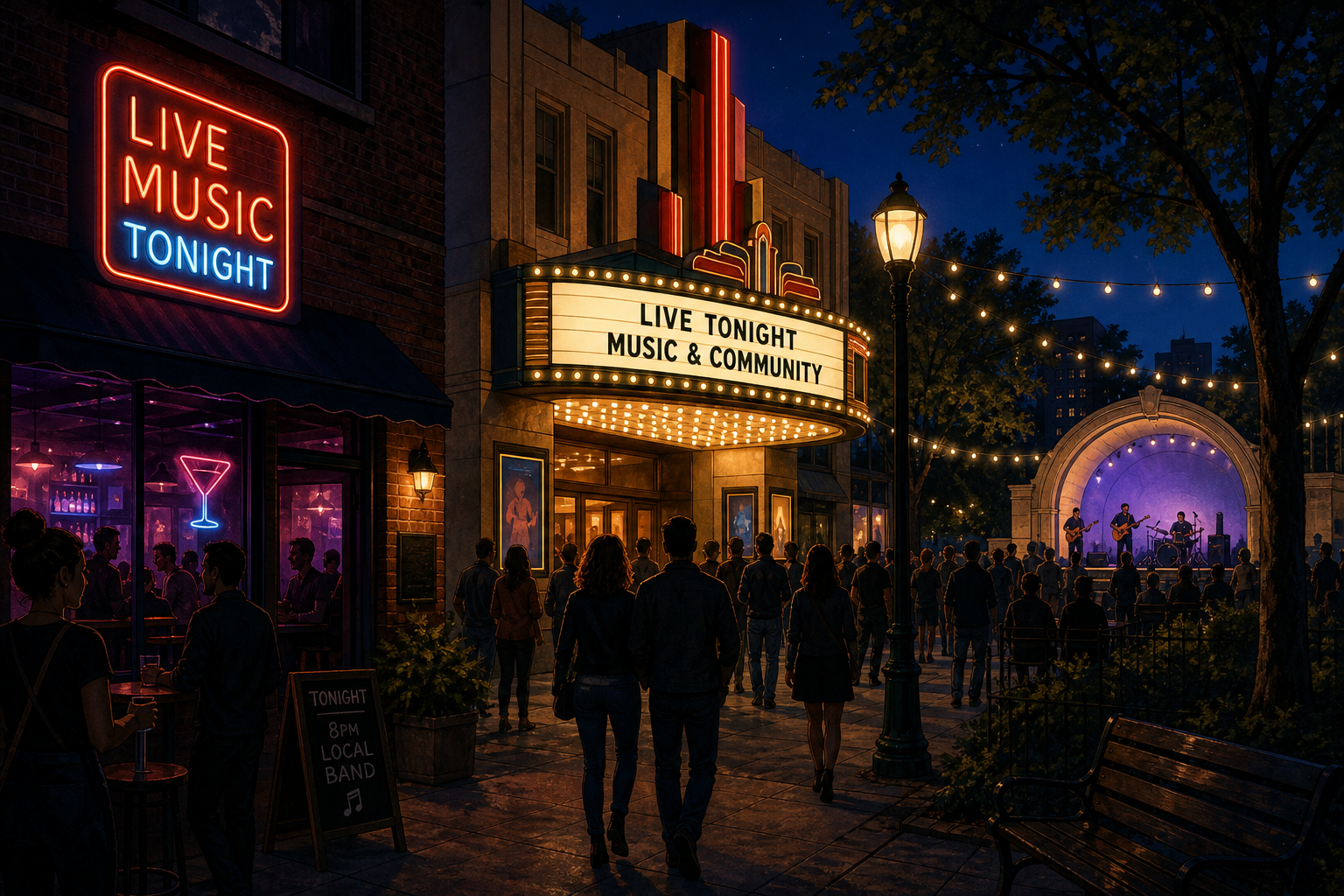
The venue shapes the night as much as the music does: a 100-capacity bar and a 10,000-seat arena are genuinely different experiences, not just different sizes.
Find live music nights in your town
Discover live music events and local venues listed on Local Eyes, your community guide to what is happening this weekend.
Venue size sets the tone before the first note
Live music venues span an enormous range, and the size of a room changes almost everything about the experience. Small clubs and dive bars hold between 50 and 500 people, which means you are close to the stage, the sound is immediate, and the atmosphere is informal. Theaters step up to roughly 500 to 3,000 capacity, often in historic buildings with balcony seating and acoustics designed specifically for performance. Concert halls, engineered for sound, typically seat between 1,000 and 5,000. At the larger end, indoor arenas hold 5,000 to 20,000 people, and concert stadiums can exceed 90,000. Knowing the capacity of a venue before you go tells you a lot about what kind of night to expect.
Genre tends to follow the room type
The style of music you are likely to hear is closely tied to the kind of venue hosting it. Opera houses and concert halls typically program classical performances, while nightclubs and public houses lean toward contemporary genres such as rock, dance, country, and pop. Jazz clubs occupy their own niche, usually in smaller, more intimate rooms where the acoustics and the crowd suit the format. Theaters and performing arts centers tend to book a wider range of acts, from folk and Americana to touring theatrical productions with live orchestras. If you have a specific genre in mind, matching it to the right venue type will save you from showing up somewhere that does not quite fit.
Indoor and outdoor venues offer different trade-offs
The indoor versus outdoor distinction matters more than it might seem. Indoor venues, from pubs and nightclubs to concert halls and arenas, offer controlled acoustics and weather-proof reliability. Outdoor venues include bandstands and bandshells typically located in parks, as well as open-air amphitheaters that can hold large crowds under the sky. Outdoor shows often have a more relaxed, communal atmosphere, but sound quality can vary depending on the setup and the space. Seasonal timing matters too: outdoor programming tends to concentrate in warmer months, while indoor venues run year-round. Checking whether a venue is indoor or outdoor before you go is a simple step that prevents a lot of surprises.
Cover charges reflect more than just the act
Entry models vary widely. Some venues are unticketed with walk-in access, some charge a cover at the door, and others require advance tickets. The cover charge at any given venue is shaped by several factors: the popularity and reputation of the venue, the day of the week, the type of event, and the specific amenities offered. A venue hosting a well-known touring artist will typically price entry higher than one featuring a local act on a Tuesday. Weekend nights generally carry higher charges than weekdays, because demand is higher. Seasonal events such as New Year's Eve or Halloween often see cover charges rise further still. Understanding what drives the price helps you plan and avoid sticker shock at the door.
Where to look when you want to go out this weekend
The most reliable way to find live music near you is to use several sources in combination. Local event listing platforms, venue social media pages, city arts and entertainment calendars, and ticketing sites that let you filter by location, date, and genre all serve different parts of the picture. Venue pages tend to be the most up-to-date for last-minute changes or additions. City calendars are useful for community events, outdoor programming, and non-commercial venues such as parks, church halls, universities, and community centers, all of which regularly host live music. Combining a ticketing platform with a local community guide gives you the broadest view of what is actually happening on any given night.
How to find the right live music night for you
- 1
Decide what kind of experience you want
Before searching for shows, think about the atmosphere you are after. A small club with a 100-person capacity delivers a very different night from a 5,000-seat concert hall or an open-air amphitheater. Matching the venue size and type to your mood is the first filter, and it narrows your search considerably.
- 2
Match your genre to the right venue type
Classical and orchestral music lives in concert halls and opera houses. Rock, pop, and dance genres dominate nightclubs and mid-size theaters. Jazz clubs and listening rooms have their own circuit. Once you know the genre you want, look specifically at venues known for that format rather than browsing everything at once.
- 3
Check multiple sources for what is on
No single platform captures every show. Use a combination of local event listing sites, the venue's own social media or website, city arts calendars, and ticketing platforms that let you filter by date and location. Venue pages are usually the most current for last-minute additions or lineup changes.
- 4
Understand the ticketing and entry model
Some shows are walk-in with a cover charge at the door. Others require advance tickets that can sell out well before the night. For larger venues and touring acts, buying tickets early is often the only way to guarantee entry. For smaller local shows, checking a few days ahead is usually enough.
- 5
Plan around the day of the week and season
Weekend nights draw larger crowds and typically carry higher cover charges than weeknights. Outdoor venues and festivals concentrate their programming in warmer months. If you are flexible on timing, a weeknight show at a smaller venue can offer a more relaxed experience with easier access.
- 6
Use a local community guide to discover what you would miss
Ticketing platforms show you what is for sale, but they do not always surface the bar with a great local band every Thursday, or the park bandshell series that runs all summer. Local community guides and neighborhood event listings fill that gap, pointing you toward the nights that regulars already know about.
Benefits
Know the room before you arrive
Venue capacity tells you almost everything about the atmosphere in advance. A 200-capacity club and a 10,000-seat arena are not just different sizes; they are genuinely different social experiences, and choosing deliberately makes the night better.
Genre and venue type are closely linked
Classical music belongs in concert halls; rock and dance genres dominate clubs and theaters. Matching your genre preference to the right venue type means you are far less likely to end up somewhere that does not fit what you came for.
Entry models vary and affect your planning
Some venues are walk-in, some charge at the door, and others require advance tickets. Understanding the entry model ahead of time prevents last-minute surprises and ensures you can actually get in for the shows that matter to you.
Multiple sources give a fuller picture
No single platform captures every local show. Combining a ticketing site with a local community guide surfaces both the major touring acts and the neighborhood bar residencies that regulars already know about.
Day and season shape the experience
Weekend nights are busier and typically carry higher cover charges. Outdoor programming concentrates in warmer months. Planning around the day of the week and the season gives you more options and a more comfortable night out.
Live music situations worth knowing about
A visitor looking for music on a single night
A traveler arriving in an unfamiliar town for one night wants to find live music without spending hours researching. The most efficient approach is to check a local event guide filtered by that evening's date, then cross-reference the venue's social page to confirm the show is still on. Smaller bars and clubs are the most accessible option for a single spontaneous night out, since they rarely require advance tickets and are usually walkable from central accommodation.
A local resident building a regular music habit
Someone who wants live music as a regular part of their week benefits from identifying two or three venues that consistently book the genres they enjoy, then following those venues directly. Many mid-size venues and clubs have weekly or monthly residencies where the same act or format repeats. Following a venue's social media or newsletter is the most reliable way to stay current without having to search from scratch each week.
A group planning a night out around live music
When a group is choosing a venue together, the practical considerations multiply: capacity, seating, sound level, and whether the venue suits conversation as well as listening. Restaurants and hotel bars with live music offer a seated, lower-volume option. Clubs and standing venues suit groups who want to be in the middle of the action. Agreeing on the atmosphere before booking saves the group from arriving somewhere that does not fit the occasion.
Someone new to a town mapping the local scene
A person who has recently relocated wants to understand the full shape of the local music scene, not just find one show. The best approach is to explore across venue types: attend a small club night, a theater show, and an outdoor event in the same month. Sampling different formats quickly reveals which venues, nights, and genres feel like a regular fit, and which parts of the scene are worth following long-term.
Common questions about live music near you
Explore live music venues and events in your town
Local Eyes lists live music venues, events, and nights out across towns in the United States and beyond. Browse the guide for your town to see what is on this week, discover venues you have not tried yet, and stay current with the local scene.